Family Business Coffee Roastery: 8 Priorities Before You Invest
A practical framework for families planning to build, expand or professionalise a coffee roasting facility — while protecting the strengths of the family and reducing dependence on informal decisions.
A family business coffee roastery has to solve two connected challenges: building a reliable food-production operation and building a company that can make professional decisions across generations.
The roaster matters, but it is only one part of the system. Demand, green-coffee sourcing, production capacity, workflow, utilities, costing, family roles, maintenance and succession must reinforce one another.
The family itself can be a major competitive advantage. Trust, commitment, speed and long-term thinking often allow family businesses to move with unusual determination. Yet the same strengths become risks when trust replaces controls, speed replaces analysis, flexibility replaces role clarity or essential knowledge remains with one person.
Know what the family gives the business — and what it can quietly take away
A family characteristic is not automatically an advantage or a disadvantage. Its effect depends on whether the business converts it into a repeatable organisational capability.
| Natural family strength | Value to the roastery | Risk when left informal |
|---|---|---|
| Shared trust | Fast coordination and confidential knowledge sharing | Decisions go unchallenged and controls are skipped |
| Strong commitment | Greater care for quality, reputation and customers | Unlimited expectations, burnout and blurred boundaries |
| Fast decisions | Rapid response to orders, sourcing and production issues | Machinery or expansion is approved before demand is proven |
| Founder knowledge | Distinctive craft, market memory and technical judgement | The operation cannot perform consistently without one person |
| Long-term outlook | Patient investment in quality, equipment and relationships | Inefficiencies and weak performers are tolerated for too long |
Build the plant around the business model
The facility should follow the market and product model. It should never become an expensive attempt to discover them afterwards.
Facility & Process Design
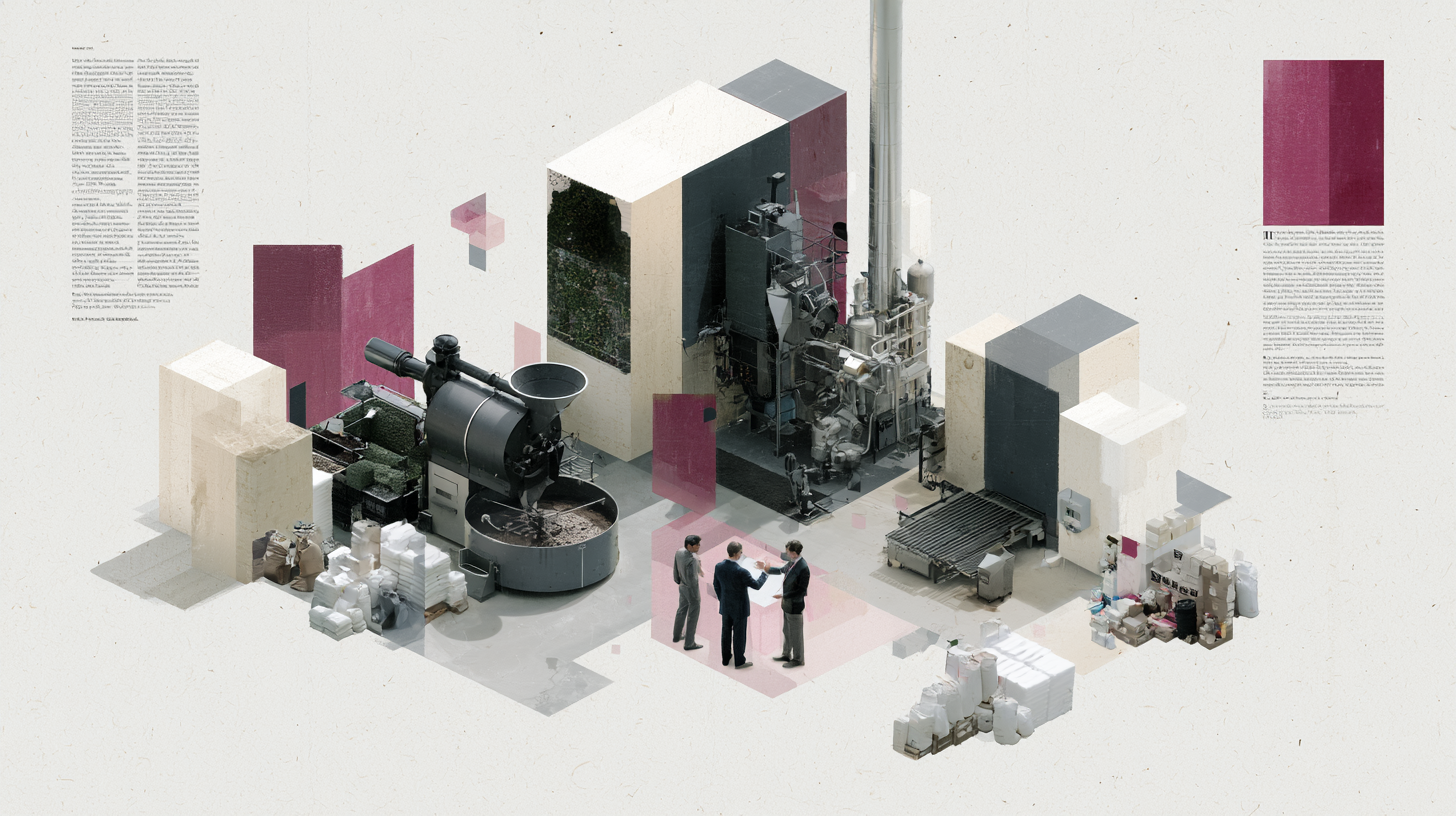
A roasting facility is a connected flow: receiving, storage, loading, roasting, cooling, destoning, resting, grinding, packaging and dispatch. The building, utilities and equipment must be designed around that flow rather than treated as separate purchases.
Green Coffee & Sourcing
A roastery cannot create consistency from unstable inputs. Define acceptance standards, approved suppliers, alternative sources, traceability rules and inventory limits before growth increases the cost of sourcing mistakes.
If their answers differ, equipment is not the first problem. Strategic alignment is.
Project evaluation can connect target output, process flow, available utilities and future growth before the roasting system is specified. This is where a machine quotation becomes a facility decision.
Turn craft knowledge into a production system
Great coffee once is craft. Great coffee repeatedly, across operators and changing conditions, is an operating capability.
Roast Process & Consistency
Approved profiles, quality criteria and batch records should make production knowledge visible. The objective is not to remove the roast master’s judgement, but to prevent the business from losing that judgement whenever one person is absent.
Production Efficiency
Nominal batch size is not sellable output. Real capacity includes roast loss, cycle time, product changes, cleaning, maintenance and the capacity of every downstream process.
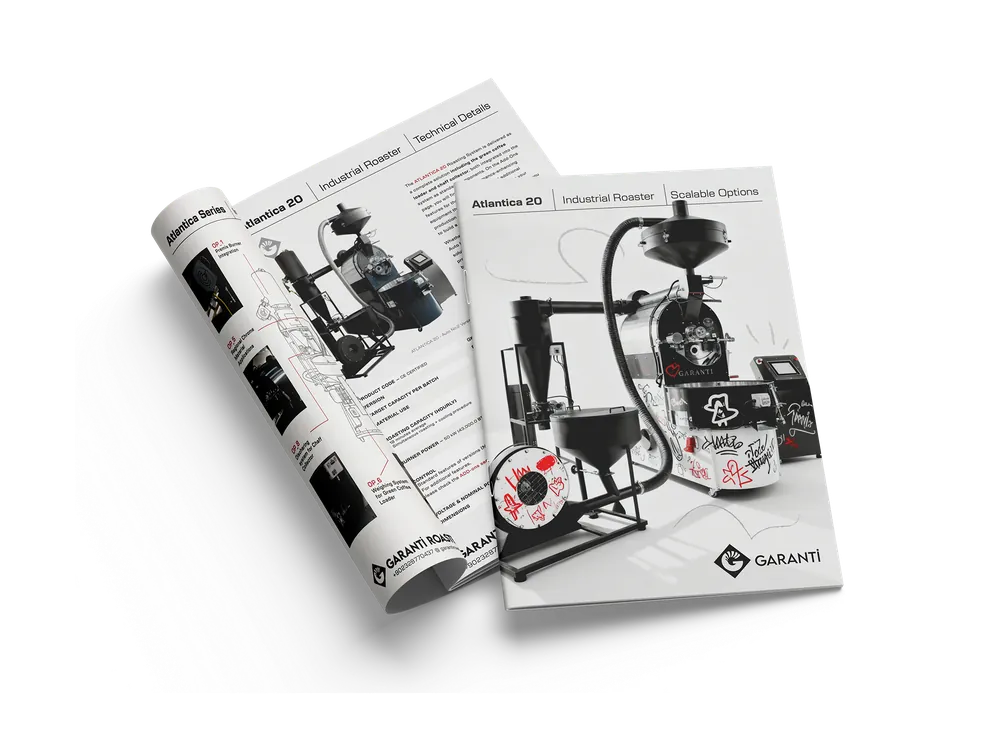
PACIFICA, FOCHA, ATLANTICA and INDIANA systems address different production models. MYGR PRO S, controlled automation, loaders, destoners, grinders and afterburner solutions can be integrated according to the required level of consistency and throughput.
Create a position that can support the economics
A roastery is not strategically different because it owns good equipment. It is different when a specific customer values the complete system of activities behind its offer.
Value Creation & Positioning
Choose the customer, problem and promise before trying to serve every possible order. A local specialty roastery, a private-label production partner and an industrial coffee producer require different product ranges, service levels and operating systems.
If not, the company has equipment characteristics — not yet a strategic position.
Financial Model & Costing
The investment model must include much more than the roaster price. Building works, utilities, freight, commissioning, storage, packaging, working capital, inventory and ramp-up losses determine whether the project can survive its own growth.
Build a company that can continue beyond one person
A family business becomes durable when family commitment is supported by roles, evidence, decision rights and a deliberate transfer of knowledge.
Institutionalization
Institutionalization does not mean removing the family character. It means converting experience and trust into a system that remains fair and functional as the company grows.
Succession & Continuity
Ownership transfer alone does not transfer capability. The next generation needs defined expectations, external experience where possible, technical education, increasing authority and a clear standard by which readiness will be judged.
Responsibility without authority exhausts the next generation. Authority without accountability weakens the institution.
A compact decision matrix
| Decision area | Family / owners | Management |
|---|---|---|
| Purpose, values and ownership policy | Approve | Advise |
| Annual budget and operating targets | Approve major limits | Prepare and execute |
| Equipment and facility specification | Approve investment | Define operational need |
| Family employment | Set policy | Apply role criteria |
| Food, fire and technical compliance | Ensure resources | Own implementation |
| Succession | Set principles | Develop candidates |
How GARANTİ Roasters supports the roadmap
The role of GARANTİ Roasters is not limited to supplying the central machine. A project can be evaluated as a production system, then supported through equipment selection, site preparation, commissioning, training and after-sales service.
| Project stage | Available support |
|---|---|
| Business and capacity review | Target batch size, net output, product mix, operating hours and growth assumptions |
| Roasting system selection | PACIFICA and FOCHA for shop and specialty applications; ATLANTICA and INDIANA for growing and industrial production |
| Integrated process equipment | Green-coffee loading, weighing, destoning, grinding, software control and emission-management configurations |
| Technical preparation | Dimensions and requirements for electrical supply, fuel, chimney, ventilation, compressed air and equipment positioning |
| Commissioning and knowledge transfer | System start-up, operator guidance, training and production support according to project scope |
| Continuity and expansion | Remote diagnostics, spare-parts supply, service coordination, GRASS support and capacity-expansion planning |
Unlock The Roastery Playbook
Enter your business email and answer two short questions. The download becomes available after submission.
Family business coffee roastery planning
What should a family-owned roastery decide before selecting equipment?
It should first define the target customer, product model, monthly net output, site conditions, complete process flow, available investment and decision authority.
Why is succession relevant before a new facility is built?
A major facility increases operational and financial dependency. If authority, technical knowledge and backup leadership are not prepared, the investment may deepen dependence on the founder.
Can GARANTİ Roasters support a complete production line?
Depending on the project, the roasting system can be evaluated together with loading, destoning, grinding, software control, emission support, commissioning, training and after-sales requirements.
Yolaç, S. & Doğan, E. — Management and Institutionalization in Family Businesses in the Process of Globalization.
Ayaz, İ. S. & Gidener, N. G. — Intergenerational Differences in Family Business: An Application in the Logistics Sector.
Vardin, H. & Yılmaz, F. M. — Elements of Food Plant Design.
Porter, M. E. — What Is Strategy?